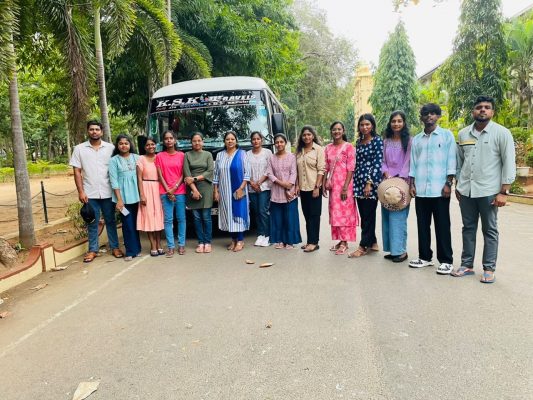
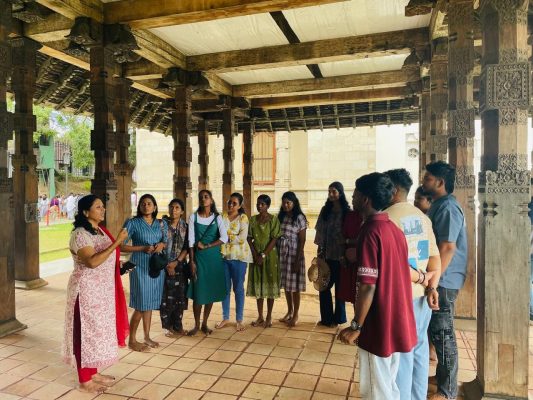
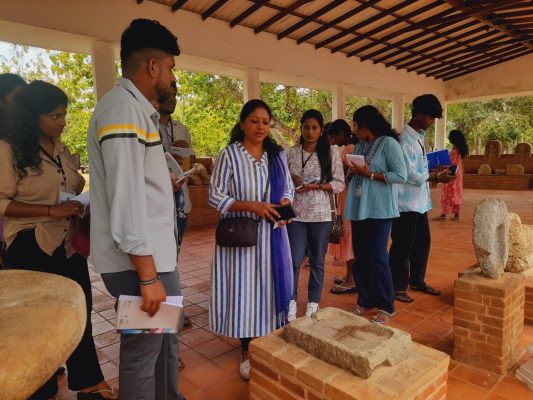
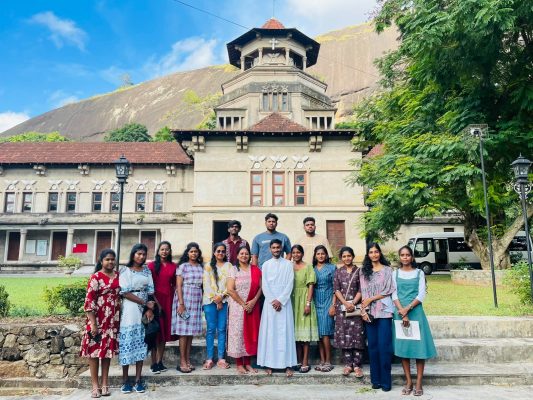
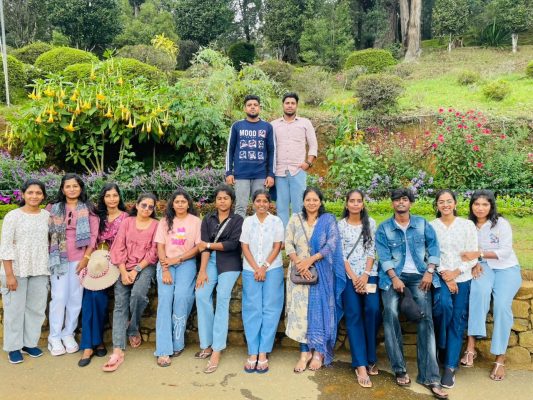
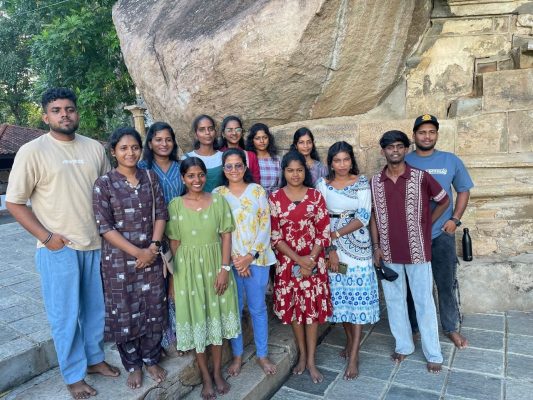
From 16 to 18 September 2026, an educational field visit was organized for Level II, Semester II students (46th Batch) of the Department of Christian Civilization as part of their academic program. The main academic objective of the field visit was to connect the theoretical knowledge gained through classroom lectures with direct observation and practical learning in the field.
Through this field-based learning experience, students had the opportunity to observe various forms of Christian art and architecture, including paintings, murals, sculptures, architectural features, and religious symbols. This enabled them to develop a better understanding of the historical, religious, cultural, and artistic contexts in which Christian art developed in Sri Lanka.
Particular attention was given to the influence of indigenous artistic traditions on Christian art and architecture, as well as the interaction between European artistic traditions and local cultural expressions. Students were also able to examine how religious beliefs, historical developments, and local cultural practices are reflected in Christian artistic forms.
The field visit further enhanced students’ skills in observation, analysis, comparison, and field-based research. It provided valuable practical knowledge and helped them understand Christian art and cultural heritage from a broader historical and interdisciplinary perspective. Thus, the field visit served as an effective academic activity that complemented classroom learning by providing students with direct exposure to the artistic, architectural, historical, and cultural heritage of Christianity in Sri Lanka.