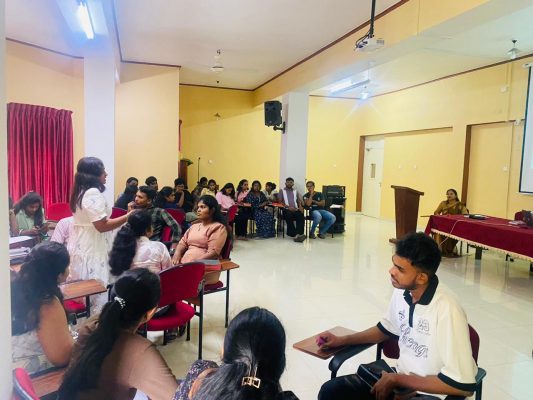
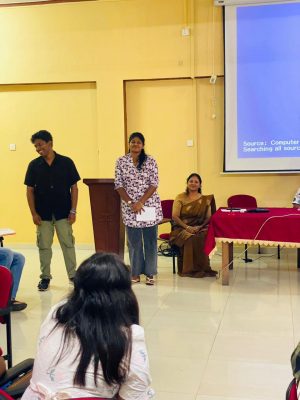
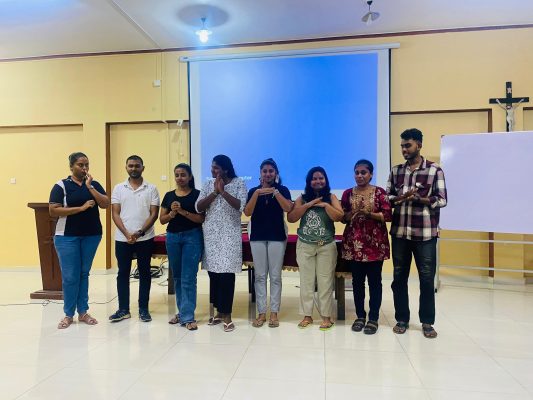
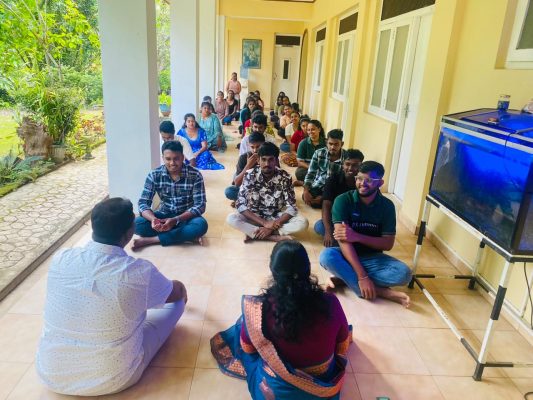
A workshop on the theme ‘The Theology of Peace’was held from 25-26 May 2026 at the Fatima Retreat House, Lewella, Kandy, bringing together students from the Department of Christian Civilization, University of Jaffna, and the Department of Western Classical Culture and Christian Culture, University of Kelaniya. Initiated in 2015, this annual academic and practical workshop continues to serve as an important collaborative platform for students to explore the intersections of faith, conflict resolution, and social harmony.
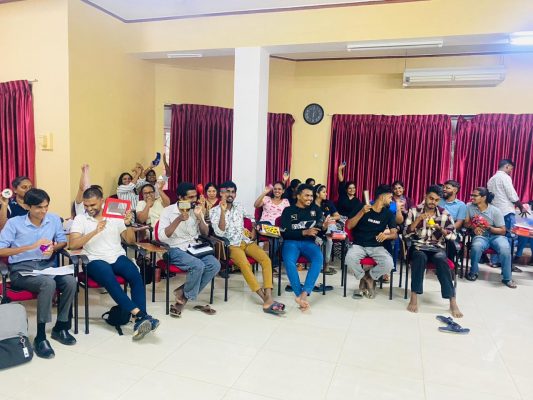
On the first day of the workshop, Ms. Tilini Wijesinghe conducted a session on the importance and applications of ‘music therapy’ for students with special needs. Through a combination of theoretical explanations and practical demonstrations, participants gained insights into the therapeutic value of music and its potential benefits for individuals with diverse learning and developmental needs.
The second day commenced with a meditation session, followed by a lecture delivered by the biblical scholar Prof. Shirley Lal Wijesinghe on the historical authenticity of the Bible. On the same day, students participated in an educational field visit to the historical museum featuring wax figures at the Temple of the Sacred Tooth Relic (Dalada Maligawa) in Kandy and to the National Seminary at Ampitiya. These visits provided valuable opportunities for experiential learning and a deeper appreciation of Sri Lanka’s religious and cultural heritage. The cultural programme held that evening served as a platform for fostering friendship, mutual understanding, and meaningful interaction among students from the two universities.
The final session of the workshop focused on the contemporary and socially significant theme of the necessity of national unity beyond ethnic, religious, and linguistic differences. Participants were encouraged to reflect on the importance of promoting social cohesion, intercultural understanding, and peaceful coexistence within a pluralistic society. Overall, the workshop provided students with a valuable and enriching learning experience, extending education beyond the traditional classroom setting and creating opportunities for intellectual growth, cultural exchange, and practical engagement with contemporary social issues.